International response, ceasefire frameworks, and the critical maritime chokepoint
Learning Objectives
Analyze the roles of key international actors in mediating the US-Iran crisis
Evaluate ceasefire and de-escalation frameworks proposed for the conflict
Assess the strategic and economic significance of the Strait of Hormuz
Propose actionable solutions for restoring commercial navigation
Overview · Learning Objectives
What You Will Learn
Analyze International Mediation
Understand how the UN, IAEA, major powers, and regional actors are responding to the crisis and what tools they have at their disposal.
Evaluate De-escalation Frameworks
Examine the practical mechanisms for ceasefire, confidence-building measures, and internationally supervised de-escalation.
Assess the Strait of Hormuz
Evaluate the geopolitical and economic significance of this critical maritime chokepoint, through which 20 million barrels of oil flow daily.
Propose Navigation Solutions
Develop actionable proposals for restoring commercial navigation while addressing the legitimate concerns of all parties.
International Response · Key Actors
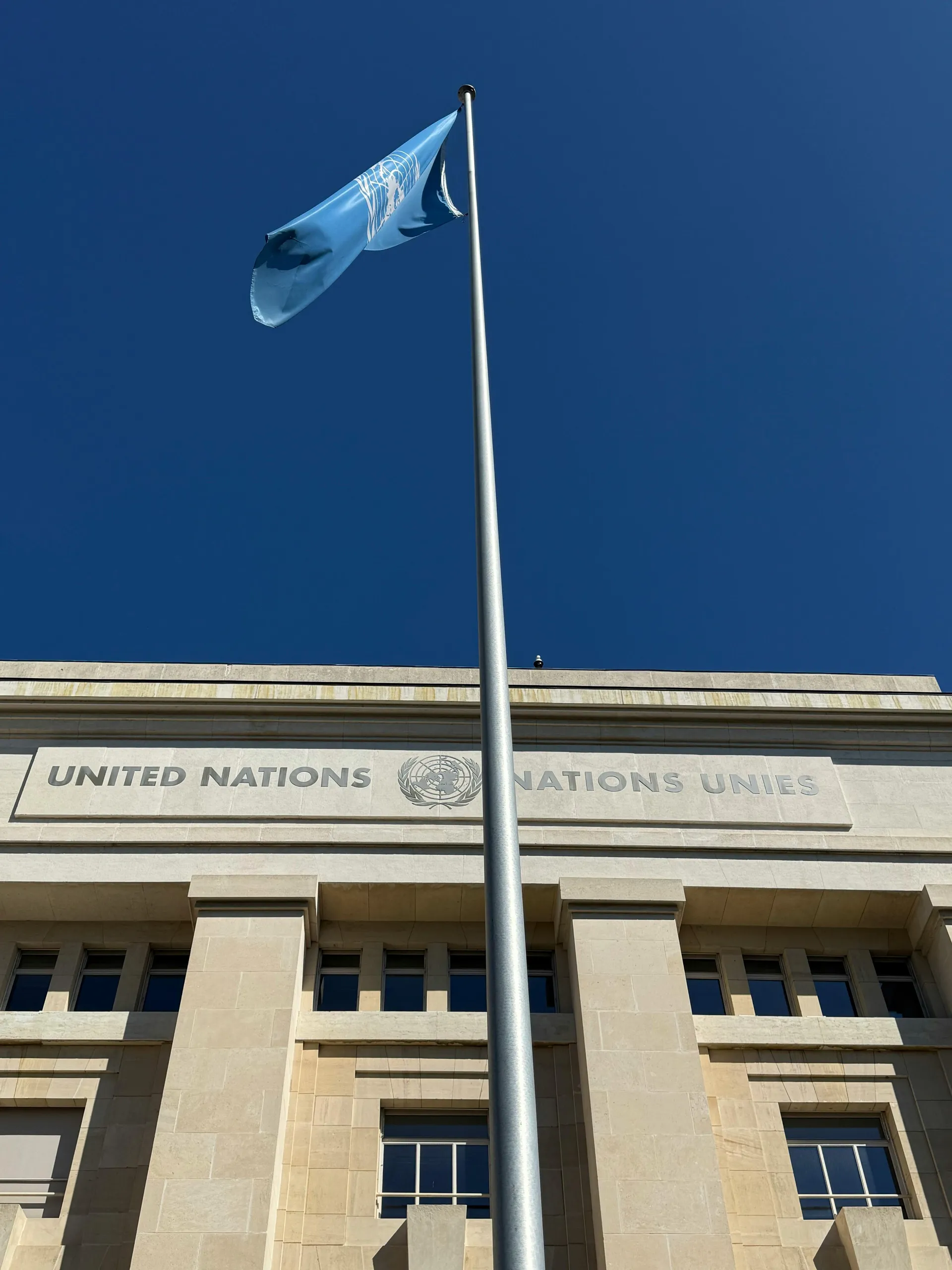
United Nations Headquarters, New York
The International System Responds
United Nations & Security Council
The UN Security Council (UNSC) provides the primary platform for dialogue, mediation, and coordination among member states. The Secretary-General can appoint special envoys and facilitate negotiations between parties.
International Atomic Energy Agency (IAEA)
The IAEA plays a critical role in monitoring Iran's nuclear activities, verifying compliance with non-proliferation commitments, and providing technical expertise for diplomatic solutions.
China
Advocates diplomatic solutions, major oil importer from Iran
"Effective crisis resolution requires balancing deterrence with diplomacy, and multilateral cooperation remains essential for lasting peace."
Pathways to Peace · Frameworks
Ceasefire & De-escalation
De-escalation Mechanisms
Third-party monitoring missions, military hotlines, maritime protocols, advance notification systems
Confidence-Building Measures
Advance notification of military exercises
Restrictions on missile deployments near borders
Regular communication channels between military commanders
Joint maritime safety protocols
Renewed Negotiations
Nuclear program discussions with IAEA oversight
Phased sanctions relief tied to verifiable steps
Economic cooperation frameworks
Regional security architecture development
Humanitarian Considerations: Any de-escalation framework must address humanitarian needs, including medical supplies, food aid, and protection of civilian populations caught in the conflict.
Case Study · United States
The US Position: Project Freedom
15,000
US service members deployed for Project Freedom
100+
Aircraft supporting maritime security operations
May 4, 2026
Project Freedom launch date
Insurance as Economic Leverage
US strategy includes using insurance mechanisms as a powerful tool. If international insurers refuse coverage for vessels transiting the Strait, those vessels cannot secure financing, effectively creating a commercial blockade.
"The military balance remains complex: while the US holds conventional superiority, Iran's asymmetric tactics—drones, mines, and small fast-attack vessels—create significant challenges."
Case Study · Islamic Republic of Iran
Iran's Strategy: The Strait as Leverage
UNCLOS Legal Gap
Iran signed the United Nations Convention on the Law of the Sea in 1982 but never ratified it. The United States has also never joined UNCLOS, creating a legal ambiguity regarding transit rights through the Strait.
Current Strait Status
The Strait of Hormuz is not fully open. While some limited passage occurs, the Islamic Revolutionary Guard Corps (IRGC) has warned ships not to pass, effectively blocking the strait and targeting at least 16 vessels.
Iran's Conditions
Lifting of US naval blockade + approximately $15 billion in frozen assets + comprehensive sanctions relief
Strategic Context
Following US-Israel strikes on Iranian targets that killed former Supreme Leader Khamenei, Iran views the Strait as its primary bargaining chip for negotiating from a position of strength.
Geopolitics · Maritime Chokepoint
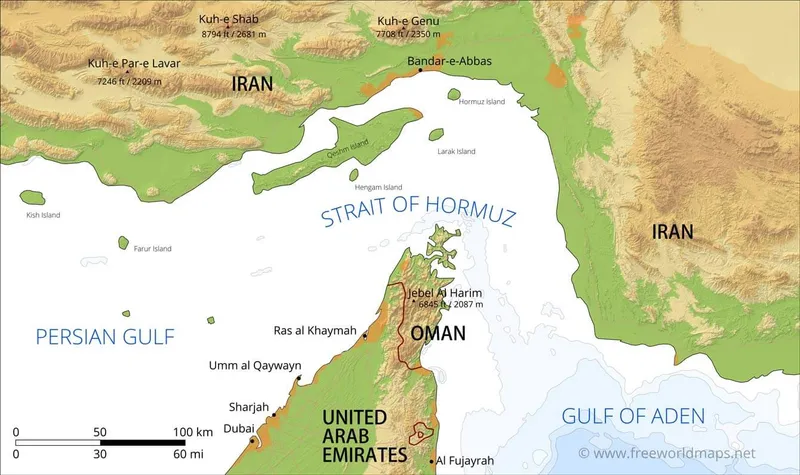
Strait of Hormuz: The narrow waterway connecting the Persian Gulf to the Gulf of Oman, a critical global energy chokepoint.
The Strait of Hormuz
20 Million
Barrels of oil transiting daily (~25% of global seaborne oil trade)
20%
Of global LNG trade (mostly from Qatar)
29 Nautical Miles
Width at narrowest point (2nm channels + 2nm buffer)
Strategic Geography
The Strait of Hormuz is a narrow passage between the Arabian Peninsula and Iran, connecting the Persian Gulf to the Gulf of Oman and the Arabian Sea. Its narrow channels create a natural chokepoint that is difficult to bypass.
Global Economic Impact: Any disruption to Strait traffic triggers immediate global oil price shocks and energy security crises, affecting economies worldwide from Asia to Europe.
Solutions · Proposals
Restoring Commercial Navigation
Sanctions Relief Linkage
Phase sanctions relief in exchange for verifiable steps: IAEA inspections, transparency measures, and gradual Strait reopening. This creates a positive feedback loop for de-escalation.
Multilateral Framework
Establish an internationally supervised transit authority involving coastal states, major shipping nations, and neutral monitors to oversee Strait operations.
Humanitarian Exemptions
Immediately establish humanitarian corridors for medical supplies, food aid, and essential goods, creating goodwill and reducing civilian suffering.
Maritime Safety Protocols
Develop joint maritime safety standards, communication protocols, and incident response mechanisms to prevent accidental escalation.
"A sustainable solution requires a multilateral framework that respects sovereignty while ensuring freedom of navigation—a balance achievable only through sustained diplomatic engagement."
Summary · Key Takeaways
Key Takeaways
International Cooperation
The crisis requires coordinated response from UN, IAEA, and major powers
Ceasefire First
De-escalation mechanisms must precede substantive negotiations
Strait of Hormuz
Critical chokepoint affecting 25% of global oil trade
Pragmatic Solutions
Sanctions relief, multilateral frameworks, and humanitarian corridors
Reflection · Discussion
Questions to Consider
Level 1: Understanding
What are the primary roles of the UN Security Council and IAEA in mediating the US-Iran crisis?
Level 2: Analysis
How does the UNCLOS legal gap affect negotiations over Strait of Hormuz transit rights?
Level 3: Evaluation
Evaluate the effectiveness of using insurance mechanisms as a tool of economic statecraft.
Level 4: Application
Design a step-by-step plan for restoring commercial navigation through the Strait while addressing Iran's legitimate concerns.